Table of Contents
What Is an SOP
An SOP (Standard Operating Procedure) is a clear and structured description of a task or action. You use an SOP to explain step by step how to install, operate, maintain or troubleshoot a device.
In some cases, an SOP describes a single action. In others, it contains multiple steps that together form a broader process, such as installation, operation, maintenance and troubleshooting.
It is important to define in advance what you mean by “SOP” within your organisation. Does it refer to a complete manual or to individual, smaller procedures? By clearly defining these terms, you prevent confusion and ensure that users understand exactly what to expect.
Our Starting Point
What do we mean by “SOP”? Technical writers who use the Information Mapping method often see it as a task with a maximum of eight separate actions. In this article, however, we use the term for the complete manual. This is the most common meaning.
How Do You Write a Good SOP
To create a clear and effective SOP, follow these structured steps:
1. Define the Purpose and Target Group
Start by determining the purpose of the SOP. What do you want to achieve? Who is the instruction intended for? Adapt the language, tone and level of detail to the user’s knowledge and experience. An SOP for an experienced technician requires different information than one for a beginner.
2. Collect and Organise the Required Information
Identify which actions and information are necessary to complete the task correctly and safely. Gather all relevant data, such as technical specifications, safety requirements and key points of attention. If necessary, consult internal experts or reliable external sources.
3. Create a Step-by-Step Plan
Develop a clear and logical step-by-step plan. Divide the task into manageable steps, each with a short and precise description. Use active and specific instructions, such as:
- “Insert the cartridge into the printer.”
- “Turn off the tap.”
Avoid vague wording.
4. Write the SOP
Expand each step based on your step-by-step plan. Use short, active sentences and avoid jargon wherever possible. If technical terms are necessary, explain them clearly. Be specific. For example, “Tighten the screw using a cross-head screwdriver” is clearer than “Secure the screw”.
5. Add Supporting Elements
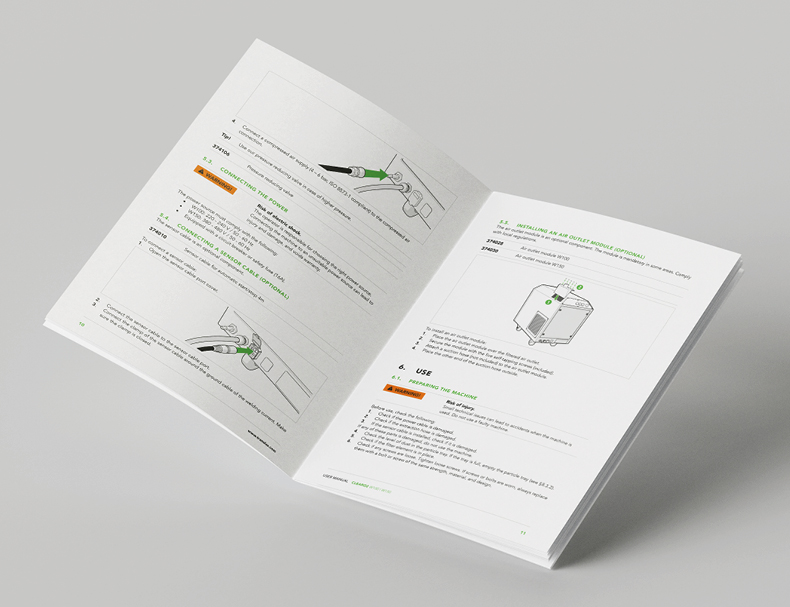
Include illustrations, diagrams or photographs where they add value. Visuals often make an SOP easier to understand and follow. Ensure that images correspond clearly with the text.
6. Review and Test the SOP
Ask a colleague to review or test the draft SOP. Check whether the steps are clear, complete and logically ordered. Collect feedback and revise the document where necessary.
7. Update and Manage the SOP
Review the SOP regularly to ensure it remains up to date. Update the document when processes, products or legislation change. Always record the date of the latest revision to maintain proper version control.
Writing SOPs for Safety and Compliance
A well-written SOP contributes directly to safety and regulatory compliance. Clearly describe which safety measures apply to the task. Specify:
- Which personal protective equipment (PPE) the user must wear
- Which hazards may occur
- How these risks can be prevented
By addressing safety explicitly, you reduce the likelihood of incidents and help your organisation comply with applicable laws and regulations.
Why Is a Step-by-Step Plan Important When Writing SOPs
As described in step 3, creating a step-by-step plan is an essential part of writing an SOP. This plan helps you structure the content and maintain a clear overview. You determine in advance which steps are required and in which order they must be performed.
Working with a step-by-step plan offers several advantages:
- You write in a clear and structured way
- You reduce the risk of overlooking important steps
- The sequence of actions remains logical and consistent
- The SOP can be updated more easily when changes occur
- Overall quality and safety improve
A structured plan therefore forms the foundation of an effective and reliable SOP.
How Do You Apply a Step-by-Step Plan to Different Types of SOPs
The length and level of detail of an SOP depend on the complexity of the task. A simple action requires only a short and clear instruction. More complex tasks often require a structured division into sub-instructions or sub-steps.
By breaking down complex procedures into manageable sections, you maintain clarity and prevent information overload. Each sub-step should describe one clear action.
For example:
Simple SOP: “Open the valve and check whether water comes out.”
Complex SOP:
- Check the main tap
- Open the main tap
- Check the pressure difference
- Follow the safety instructions
- Record the result
By tailoring the step-by-step plan to the task, the instruction remains clear and usable.
Practical Example
Suppose you want to write an SOP for replacing a toner cartridge in a printer. How do you approach this task?
Example step-by-step plan
- Define the purpose
Teach employees how to replace a toner cartridge in the printer independently. - Describe the preparation
- Switch off the printer. Allow the printer to cool down
- Carry out the main task
- Open the printer cover
- Remove the empty toner cartridge
- Unpack the new toner cartridge
- Insert the new toner cartridge into the printer
- Finish the task
- Close the cover
- Switch on the printer
- Check that the printer works correctly
- Note key points and safety
- Always use original toner cartridges
- Wear disposable gloves when replacing the cartridge
- Dispose of the empty cartridge according to the instructions
This step-by-step plan forms the basis for a clear and usable SOP.
Common Mistakes When Writing SOPs
When writing SOPs yourself, be aware of the following common mistakes:
- Unclear steps
Instructions that are too vague or too long cause confusion. - Too much jargon
Avoid specialist terms or explain them. - Incomplete information
Do not skip steps and include all necessary actions. - No logical order
Always put the steps in the order in which they must be carried out. - No feedback requested
Always test the instruction with a colleague or end user.
Do’s And Don’ts
To make your SOPs as effective and efficient as possible, consider the following do’s, don’ts and practical tips.
Do’s
- Use short, clear sentences
- Start each step with a verb
- Use images where possible
- Check the instruction for completeness and accuracy
- Have someone else review the instruction
Don’ts
- Do not use difficult words or abbreviations without explanation
- Do not add unnecessary information
- Avoid combining multiple actions in one step
- Do not make the instruction longer than necessary
Tips for an effective SOP
- Keep the language simple and clear
- Number the steps
- Use bold headings and clear subheadings
- State the result achieved for each step
- Use consistent formatting
Writing SOPs Yourself or Involving an Expert
Writing a clear SOP begins with a well-structured step-by-step plan. By formulating each step in a specific and logical way, you make tasks safer and easier to perform. This reduces errors, increases efficiency and improves overall quality within your organisation.
Would you like to ensure that your SOP meets all relevant requirements? Or do you have questions about structuring and writing effective SOPs? Manualise is happy to support you in developing, reviewing and optimising clear, practical and user-friendly SOPs.