What Is an Online Manual
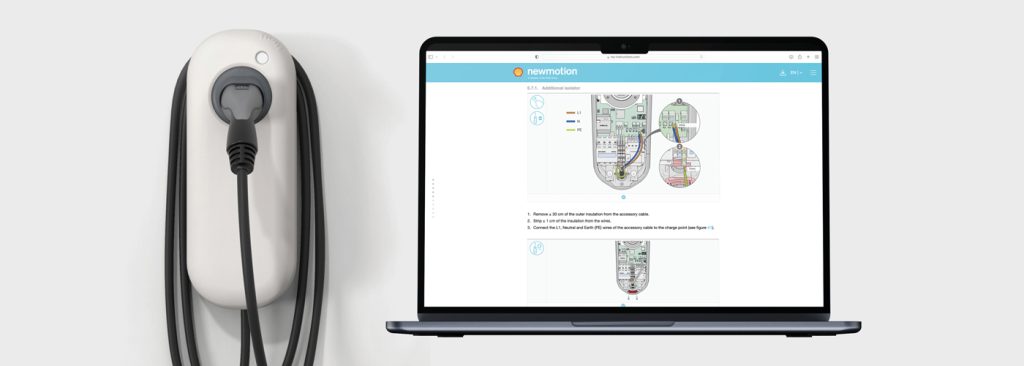
An online manual is the digital equivalent of a traditional user manual. Instead of receiving a printed booklet, users access instructions digitally—for example through an interactive PDF, a webpage or an app. The purpose remains unchanged: to explain how a product can be used safely and effectively. The main difference lies in the way the information is delivered and accessed.
Digital manuals increasingly include additional features such as:
- Clickable tables of contents
- Step-by-step modules or video instructions
- Search functionality
- Language selection options
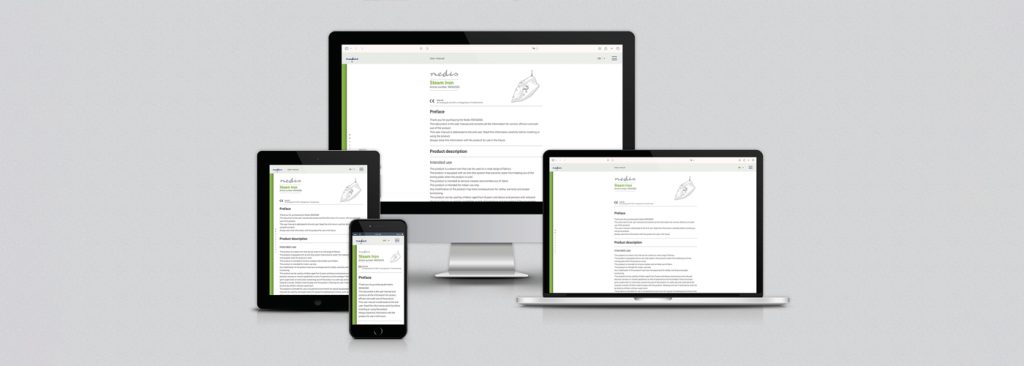
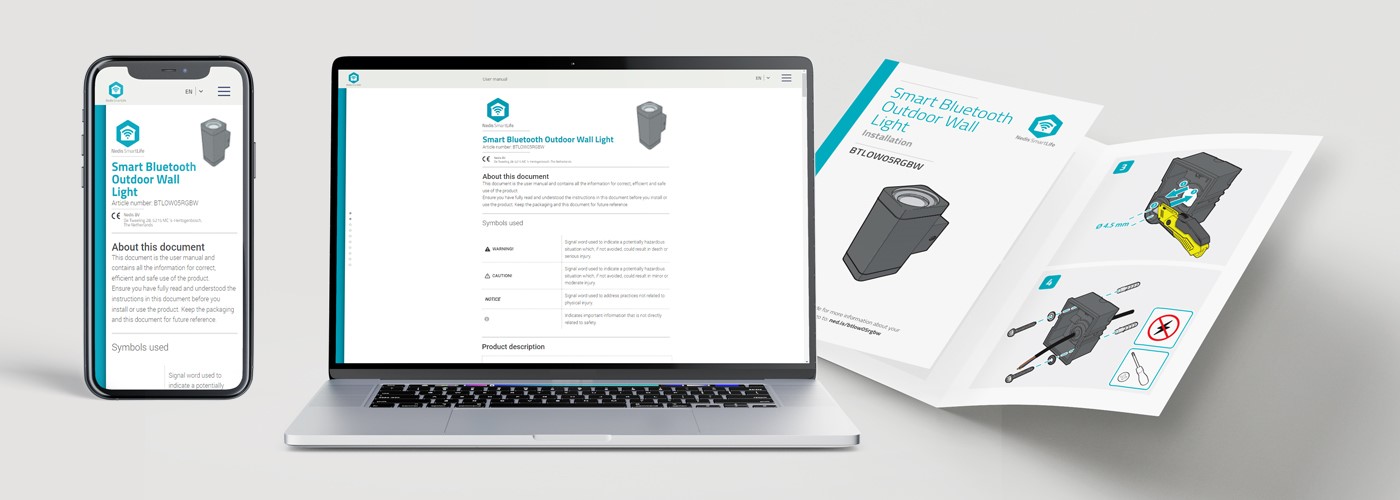
They are usually optimised for smartphones, tablets and desktop computers and can be updated easily when products change.
Want to learn more? Read our articles about PDF manuals and online output.
Advantages of Online Manuals
Compared with printed documentation, an online manual offers several important advantages.
1. Immediate Access
Users no longer need to search for a printed booklet. A QR code on the product, a link on a website or a button in an app provides instant access to the correct manual.
2. Easy Updates
When product functionality or interfaces change, digital documentation can be updated quickly without reprinting or redistributing manuals. Errors can be corrected immediately, preventing users from relying on outdated information.
3. Multimedia Support
Complex technical procedures are often easier to explain using videos or animations than through text alone. Interactive elements therefore make instructions clearer and improve the learning process.
4. Cost Reduction
Digital manuals eliminate printing, storage and distribution costs. Clearer instructions can also reduce product returns and lower the demand for customer support.
5. Multilingual Availability
An online manual can easily be offered in multiple languages. Users can simply select their preferred language, improving accessibility and the overall user experience.
When Is an Online Manual Efficient
Printed documentation still has value in many situations. However, digital manuals can be more effective—or even preferable—for certain product types.
- Software and Applications
Platforms such as Microsoft Teams or accounting software change frequently. An online manual ensures that users always have access to the most current instructions. Content can also be adapted to different user roles, making digital documentation more flexible than printed manuals. - Smart Devices
For products such as smart lighting systems, robot vacuum cleaners or smart doorbells, users are already familiar with digital interfaces. Accessing instructions through an app or website therefore fits naturally within the user experience. - Complex Technical Products
For technically advanced products, visual support through video or animation can significantly improve understanding. Examples include medical devices such as digital insulin pumps or industrial measuring instruments.
Digital documentation also offers advantages for international markets. Publishing multiple language versions becomes easier, while reducing paper use and transport contributes to sustainability.
Legal Requirements and Limitations: Guidelines Regarding Format
Although digital manuals offer considerable flexibility, they must comply with legal requirements. Within Europe, regulations define how user information must be provided in terms of format, content and availability.
Requirements concerning the format of documentation vary by product category. Industrial machinery and medical devices are subject to stricter regulations, but other product groups may also have sector-specific rules.
Two important examples include:
- Machinery Regulation (EU 2023/1230), which defines when digital manuals for machinery are permitted
- Medical Device Regulation (EU 2017/745), which regulates electronic instructions for medical devices
Machinery Regulation (EU 2023/1230)
The new Machinery Regulation allows instructions for use—including manuals—to be provided digitally under certain conditions:
- The information must be easily accessible to the user
- A printed version must be available on request
- Documentation must remain available for at least ten years after the product is sold
- For products intended for non-professional users, printed documentation is often still required.
MDR (EU 2017/745) – Medical Devices
Also medical devices are subject to additional requirements:
- Digital instructions may only be provided with the user’s consent
- A risk assessment must demonstrate that digital delivery does not create safety risks
- A printed manual must remain available on request
Legal Requirements and Limitations: Guidelines Regarding Content and Availability
Requirements relating to the content and availability of manuals may be either general or product-specific. Product-specific rules arise from directives such as the Low Voltage Directive or standards such as ISO 20607:2019 – Safety of Machinery – Instruction Handbook.
The following standards and regulations contain general requirements regarding content and availability:
Regulation (EU) 2023/988 – General Product Safety
This regulation requires that users always have access to essential safety information in a language they understand. For digital manuals this means:
- The language must correspond to the local market (for example French for France)
- The information must be supplied with the product or be easily accessible
IEC/IEEE 82079-1:2019 – International Standard for Instructions for Use
This international standard provides guidance on the structure, content and wording of manuals. It addresses topics such as:
- Logical information structures and clear heading levels
- Consistent terminology
- Instructions tailored to the target audience
- Safety warnings and visual support such as pictograms
Documentation developed in accordance with this standard improves both usability and product safety.
WCAG Guidelines
The Web Content Accessibility Guidelines (WCAG) are the global standard for digital accessibility and are widely recognised as the reference framework for accessible websites, apps and digital documents.
They are already mandatory in many public-sector environments, such as government websites and digital documentation in healthcare or public transport. As of June 2025, with the introduction of the European Accessibility Act (2019/882), these requirements also apply to many commercial digital products and services, including webshops, e-books and mobile apps.
Complying with WCAG means ensuring that digital documentation includes accessibility features such as:
- Text alternatives for images
- Adequate colour contrast
- A structure that works with screen readers
What to Consider When Developing an Online Manual
Developing digital documentation requires a slightly different approach than creating printed manuals. Key aspects include the following.
1. Responsive Design
Ensure that the manual functions correctly on different screen sizes—from smartphones to desktop computers. Text, images and navigation elements should automatically adapt to the user’s device.
2. Clear Structure and Navigation
Users must be able to find information quickly. Use clear chapter structures, clickable tables of contents and an effective search function.
3. Version Management
Digital documentation is updated and distributed more frequently than printed manuals. A structured version management system helps maintain control over revisions and ensures that earlier versions remain accessible.
4. Accessibility
Ensure that the manual is also usable for people with disabilities. Consider adequate colour contrast, alt text for images and structures that work well with screen readers.
An online manual offers many opportunities to improve accessibility for a wide range of users.
Developing Manuals Yourself or With Expert Support
It is clear: The online manual is no longer an experimental concept. It has become a fully developed alternative—or complement—to printed documentation.
If you plan to create online manuals yourself, Manualise offers single-source publishing software under licence, allowing you to manage documentation efficiently.
Prefer expert support? Manualise has more than 15 years of experience developing user-friendly manuals for a wide range of clients—both for print and digital publication.