Table of Contents
What Is Multichannel Output
Multichannel output refers to publishing information from one central source to multiple publication channels. Instead of managing several separate documents, you maintain a single structured source that can be converted into different formats.
This approach increases efficiency, reduces the risk of errors and ensures users receive the same reliable information regardless of the channel.
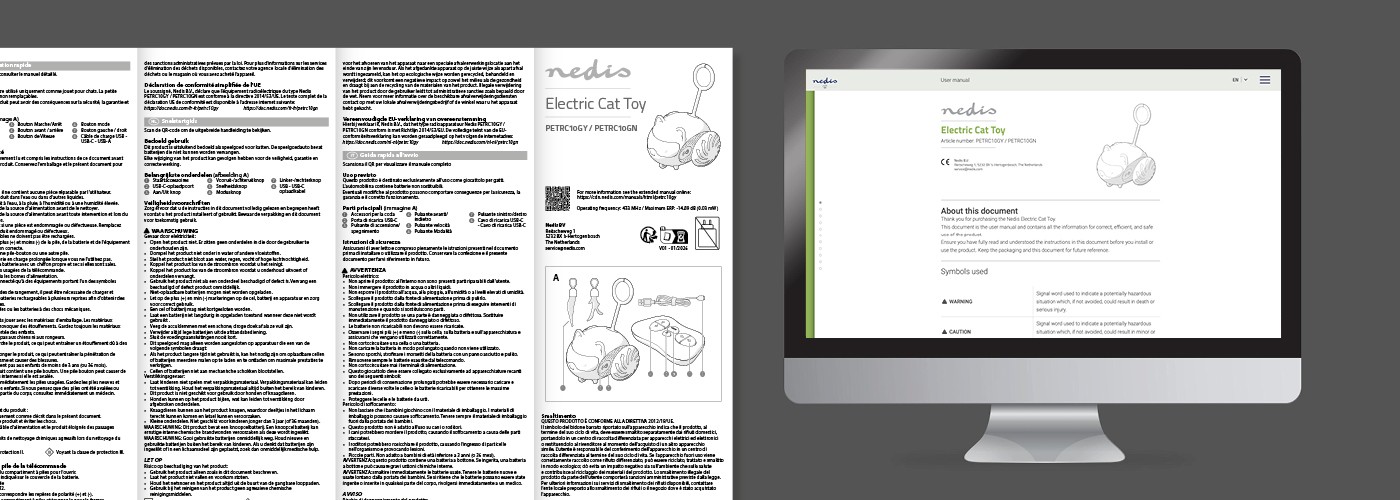
For example, a manual written in XML (see Structuring Content later in this article) can be automatically converted into:
- a print-ready PDF
- an HTML version for a web portal
- a mobile version for an app
- an interactive help system within software
When the source content changes, the update automatically appears in every output format.
Why Multichannel Output Is Important for Technical Documentation
Technical documentation must be reliable, clear and easy to use. At the same time, users increasingly expect immediate access to up-to-date information on the device that suits their situation. A technician on the work floor may consult instructions on a smartphone, while an engineer in the assembly hall may prefer a tablet. Others may download a PDF to a laptop.
Multichannel output addresses these expectations directly. By publishing documentation from one central source, organisations retain full control over their content. Every user receives the same version of the documentation, regardless of the chosen channel. This reduces the risk of errors, prevents outdated instructions and improves product safety.
Multichannel output also makes documentation easier to adapt to new technologies. Interactive web documentation, mobile applications and integrated help systems can be added without rewriting the underlying content.
In this way, single-source publishing ensures consistent, accessible and future-ready product information.
How Multichannel Output Works in Practice
Publishing across multiple channels starts with structured content management. The foundation is typically a CCMS (Component Content Management System), which manages information at component level. Instead of writing complete documents, the content is divided into small, reusable information blocks.
Want to learn more about CMS systems? Read our article “Creating Manuals Efficiently with a CMS” or watch our video about managing documentation efficiently.
The multichannel workflow generally follows these steps.
Step 1 – Structuring Content
Content is stored in a structured format, often XML. Each information element — such as a safety warning or procedure step — receives clear tagging and metadata. This allows the system to recognise where and how the content should appear.
Step 2 – Defining Templates and Layout
The visual presentation is separated from the content. Templates are created for different publication channels, such as a layout for print, a web template for online publication and a mobile display for apps.
This separation ensures the same content can appear correctly in different formats.
Step 3 – Automated Publishing
Once the content and templates are connected, the system automatically generates the required output formats. With a single action, the same manual can be published as a PDF, HTML page or mobile view.
Step 4 – Managing Translations and Updates
Because the content is modular, only the components that have changed require translation. This reduces translation costs and shortens revision cycles. Central update management also prevents inconsistencies between language versions.
The result is a streamlined workflow in which content, layout and publication are clearly separated.
Benefits of Multichannel Output
Multichannel output offers significant advantages for both organisations and users. We have listed them below.
Benefits for Organisations
Publishing documentation from a single source creates a more efficient and reliable documentation process. All information is managed centrally, and every change can be applied in a controlled way to every publication.
Key advantages include:
- Time Savings
Changes are made once and applied to all outputs in a controlled way. This reduces time spent on checking, editing and reformatting documentation. - Lower Costs
Fewer steps in the process mean fewer errors and less rework. Translation costs also decrease because translated components can be reused. Only (partly) new sections require translation. - Faster Market Introduction
Updated product information can be published simultaneously in multiple languages, formats and platforms. This enables organisations to respond quickly to market developments. - Consistency
All publications use the same content, layout and terminology. This ensures a uniform appearance across printed manuals, websites and mobile applications.
The Value of Consistency in Brand Communication
Consistency in documentation also strengthens brand communication. When manuals, websites and applications are generated from the same source, tone, style and terminology remain aligned.
This provides several benefits:
- One clear brand voice across all communication channels
- Consistent style and terminology in every publication
- Greater brand recognition and trust
For international organisations, centralised content management also ensures that local translations and regional variants remain aligned with the original message. Multichannel output therefore supports both operational efficiency and a professional brand image.
Benefits for Users
Multichannel output also improves the user experience. Key benefits include:
- Ease of Use
Users can access documentation through their preferred format, such as a web manual, mobile application or downloadable PDF. - Reliable Information
Because updates are managed centrally, the content remains consistent and accurate across all platforms. - Accessibility
Documentation remains available anywhere and on any device. Whether users are online or offline, they can access the information in the format that suits their situation.
These advantages make multichannel output a strategic choice for organisations that want to professionalise their documentation.
Challenges and Points of Attention
Although multichannel output offers many benefits, successful implementation requires careful preparation.
Technical Implementation
Implementing a CMS or CCMS requires technical expertise. Organisations must define how content will be structured and managed. A clear structure and well-defined metadata are essential for automated publishing.
Template Maintenance
Templates determine how content appears across different channels. They must align with corporate branding and the technical requirements of each publication platform. Regular maintenance ensures consistency across all output formats.
Structured Content Is Essential
Effective multichannel publishing depends on structured content. Writers must work with clearly defined components, short modules and consistent terminology. Organisations may need to train writers who are transitioning from traditional document writing to modular documentation.
Workflow Management
Clear workflows are essential. Teams must define roles, permissions and approval steps to maintain quality and ensure that every change is traceable.
By addressing these aspects early, organisations can fully benefit from multichannel publishing while keeping the process manageable.
Getting Started with Multichannel Output
The future of technical documentation lies in flexibility and automation. Multichannel output forms the foundation for a scalable content strategy that can adapt to technological developments.
Do you recognise the advantages of a single-source approach? Manualise offers single-source software under licence, enabling organisations to implement multichannel documentation efficiently.
Need support? We can help you set up, structure and implement this approach.
Prefer to outsource the development and management of your documentation? Manualise has been creating user-friendly manuals for more than 15 years for a wide range of clients, both for print and digital environments.