Table of Contents
Why Translate User Manual Documentation
For many products, the decision to translate the user manual is not optional but required by law. Within the European Union, Regulation (EU) 2023/988 on general product safety requires that all user information is available in a language the consumer understands.
For example, if an electrical device is sold in France, the manual must be provided in French. This requirement applies not only to the main instructions but also to warning labels, pictograms, safety information and operating instructions.
Manufacturers placing products on the European market should therefore plan translation early in the development process, not only after production.
Legal Risks of Incorrect Translation
Products without clear instructions in the appropriate language may be considered defective. Legally, this means the product may be deemed unsafe to place on the market. In such cases, manufacturers or importers may be held liable for damage or personal injury. Even if the product itself functions correctly, incomplete or incorrect documentation can lead to claims, reputational damage or product recalls.
To translate a user manual is therefore an essential part of product safety and risk management.
Improving the Customer Experience
Beyond regulatory requirements, translating a user manual significantly improves customer satisfaction. When users immediately understand how a product works, they make fewer mistakes and are less likely to contact customer support. This reduces service costs and strengthens the reputation of the product.
Providing instructions in the user’s native language also demonstrates respect for the end user. Whether the customer is a consumer or a professional, clear documentation contributes to a positive product experience. From a marketing perspective, the decision to translate user manuals is therefore a valuable investment.
What Is Localisation
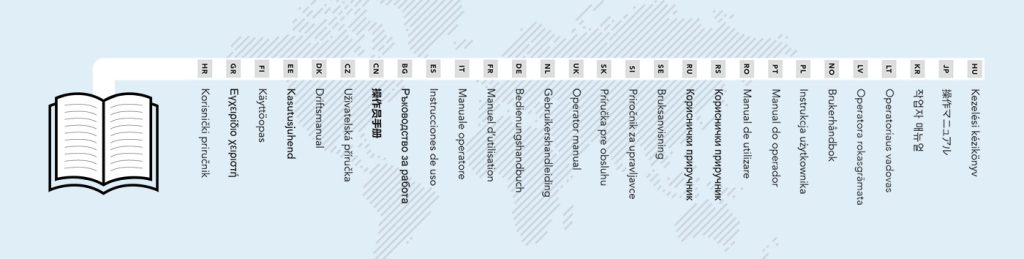
When you translate a user manual, translation alone is not sufficient. Localisation adapts documentation to cultural and contextual differences between countries.
Localisation focuses on making information familiar and understandable for the target audience. Examples include:
- Date and time formats (dd-mm-yyyy versus mm-dd-yyyy)
- Units of measurement (inches, feet and pounds versus centimetres, metres and kilograms)
- Colour meanings (for example, white symbolises mourning in some cultures but purity in others)
- Symbols and pictograms that may be interpreted differently across countries
Expectations regarding safety instructions can also vary significantly between regions. Successfully translating a manual therefore involves more than language conversion. It requires instructions that are technically correct and locally relevant.
Where to Translate User Manuals
There are several options when you need to translate a user manual. The best approach depends on your budget, the complexity of the material and the number of target languages.
- Freelance Translators
Freelancers are often cost-effective but require more coordination. When working with multiple languages, several translators may need to be managed. - Translation Agencies
Translation agencies usually provide project management, quality control and a single point of contact. Large agencies support many languages, although specialised technical expertise may vary. - Specialised Agencies
Specialised translation agencies focus on specific industries, such as engineering or legal documentation. Their translators often possess deep subject-matter expertise.
Whichever option you choose, the translator must understand the technical context. Translating a manual for a medical pump requires very different knowledge than translating an installation guide for outdoor lighting.
Machine Translation
Another option is machine translation. Machine translation tools such as Google Translate, MateCat or DeepL have improved significantly and can provide fast and cost-effective results, particularly for large volumes of text. However, machine-generated translations should always be reviewed by a professional translator—a process known as post-editing. This is especially important for technical and legal content.
Combining machine translation with human review offers a balance between speed and accuracy.
Translate a User Manual: Costs
To translate user manuals involves investment, but it can also generate clear benefits: reduced support costs, fewer returns and improved customer satisfaction.
The following strategies help control translation costs.
- Optimise the Layout
Maintain a consistent and structured layout. Use automated tables of contents, consistent heading styles and linked (rather than embedded) images.
This simplifies preparation for translation and reduces processing time. - Reduce Text Volume
Less text means less translation work. Write concise, active sentences and remove unnecessary explanations. Where possible, replace text with illustrations, tables or pictograms. This approach accelerates translation while improving usability. - Use a CMS and Translation Memory
A Content Management System (CMS) allows you to reuse content across multiple documents. When combined with translation memory technology, identical or similar sentences do not need to be translated repeatedly.
For regularly updated manuals or multilingual documentation, this approach saves both time and cost. - Combine Translation Projects
Many translation agencies apply a minimum project fee. Submitting multiple documents in a single project helps distribute these fixed costs more efficiently. - Combine Machine Translation with Post-Editing
Machine translation combined with professional post-editing can significantly reduce costs. This approach is particularly effective for repetitive or structured content.
Translating User Manuals: Our Approach
If you plan to sell your product internationally, the accompanying documentation must be translated and localised. Manualise manages this process from start to finish.
Our workflow for multilingual documentation consists of three phases.
Step 1 – Preparation
We analyse the source material, define the scope of the project and prepare a detailed translation plan.
Step 2 – Pre-production, Translation and Post-production
This stage may include optimising the source material, creating glossaries or terminology lists, preparing content for translation, translating the documentation and converting translated text back into the original format.
Step 3 – Desktop Publishing and Quality Control
The translated documentation is formatted and carefully reviewed. The final result is a fully designed document ready for publication.
Translation Partners
Manualise works with an extensive network of reliable translation partners. From this network we select translators who match your requirements in terms of quality, cost and delivery time. The final choice always remains yours. If you already work with a preferred translation partner, we are happy to collaborate with them.
We also support machine translation solutions.
Once the translation process is complete, we ensure that the documentation is correctly formatted and delivered as a publication-ready document.