Table of Contents
What Is an SOP
An SOP (short for Standard Operating Procedure) is a clear instruction for carrying out a task. You can find SOPs in text, images or videos. The instruction must always be action-focused, so the user immediately knows what to do. A good example:
“Turn off the tap when the water level is about 2 cm below the top edge.”
This instruction is clear and direct. There is no room for confusion or personal interpretation.
In practice, SOPs often become overloaded with additional information. Consider background details, explanations or policy statements. When all this content appears in one paragraph, the document quickly loses clarity.
As a result, the actual instructions are difficult to identify. Users may overlook essential steps, which increases the risk of errors and inefficiency.
An SOP is not:
- Background information (why something is needed)
- Structural information (which parts something consists of)
- Policy information (how often or when something must happen)
Place background information, explanations and policy details in separate paragraphs or chapters, each with a clear heading.
This structure keeps the manual organised and ensures that the instructions remain easy to find and follow.
The Importance of Good SOPs
Good SOPs offer more than clear instructions alone. They help prevent errors, increase safety and ensure consistency in task execution. By using well-structured SOPs, everyone—regardless of experience or educational background—can perform the same task in the same way. This improves reliability and reduces the risk of accidents or damage.
In addition, effective SOPs support the onboarding of new employees. They enable staff to work independently and reduce the need to ask colleagues for assistance. As a result, your organisation saves both time and costs.
How Do You Approach Making SOPs
Making SOPs does not have to be complicated. Always keep the following basic principles in mind:
- Use the imperative:
Keep it short and direct, for example:
“Switch on the printer.”
Avoid long sentences such as: “You can now switch on the printer if you wish.” - Number the instructions:
By numbering each step, you create a logical order. The user knows exactly what to expect. - Start with a clear task description:
Above each set of instructions, state the goal, for example:
“Filling the water barrels.”
Practical Tips for Making SOPs
- Be specific: Avoid vague terms like “regularly” or “carefully”. State clearly what must happen, when and how.
- Use simple language: Aim for B1–B2 level so less experienced users understand the instruction.
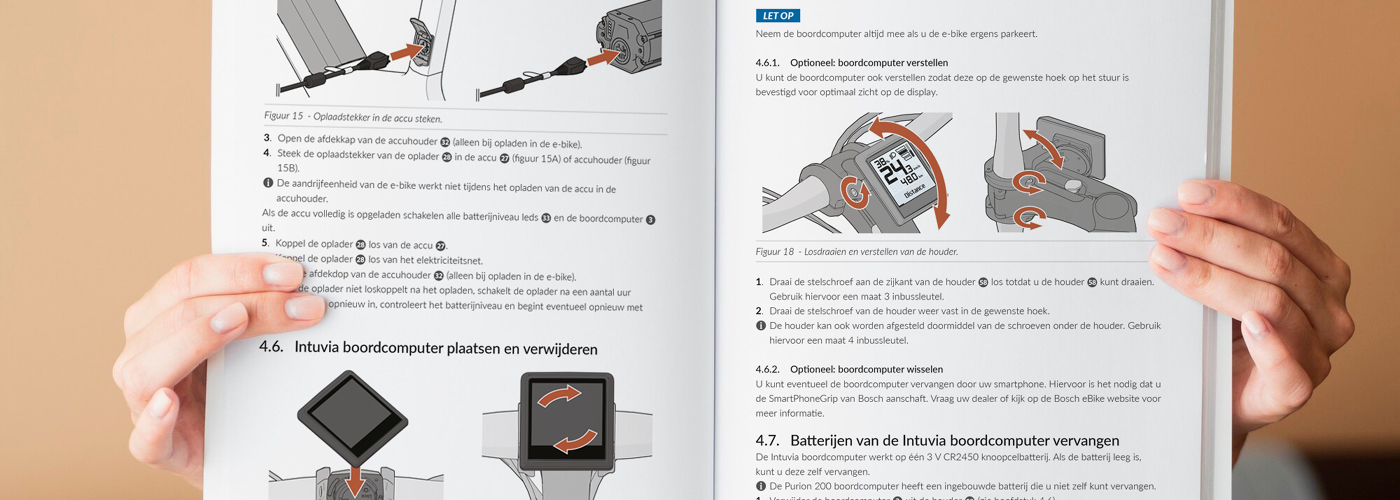
- Use illustrations: Images or pictograms support the text and quickly show what is meant.
- Avoid duplicate instructions: Describe each action only once to prevent confusion.
- Check the sequence: Test the instructions by doing them yourself or asking someone else to test them.
Example of an SOP
This example shows how to split a task into practical steps. By naming each action separately, you prevent the user from skipping steps.
Filling The Water Barrels
- Place a water barrel under one of the two taps.
- Open the relevant tap.
- Turn off the tap when the water level is about 2 cm below the top edge.
- Slide the water barrel away from under the tap; do not roll it.
- Place the filled water barrel on a hand truck.
- Move the water barrel to the warehouse.
Create a Step-By-Step Plan
A step-by-step plan helps to keep SOPs clear and manageable. Break complex tasks into smaller, logical steps. Limit each task to a maximum of seven or eight instructions. Do you exceed this number? Then divide the task into separate sections. For example: “Filling the water barrels” and “Transporting the water barrels”.
By structuring tasks and SOPs logically in advance, you create a well-organised manual with clear and recognisable headings.
Please note: in some manuals, SOPs are referred to as “steps”. In this article, the term “step-by-step plan” mainly refers to the division of work into distinct tasks, each with its own SOP.
Example of a Step-By-Step Plan
Step-by-step plan for filling and transporting water barrels:
Task 1: Filling the water barrels
- Place the water barrel under the tap.
- Open the tap.
- Check the water level.
- Turn off the tap.
- Remove the water barrel.
Task 2: Transporting the water barrels
- Place the filled water barrel on the hand truck.
- Move the hand truck to the warehouse.
- Put the water barrel in the correct place.
By separating tasks, the instruction remains clear and structured.
Legal Requirements for SOPs
The law does not prescribe a fixed structure for SOPs. However, legislation such as the Machinery Directive requires that a manual includes all necessary instructions for safe use. You are free to decide how you formulate and structure these instructions, provided they are clear and complete.
Would you like to ensure that your SOPs meet recognised standards? Consult the Dutch standard NEN 5509 (only available in Dutch) or the international standard IEC 82079-1. These standards provide clear guidelines for drafting technical instructions. They address topics such as document structure, language use, layout and the application of safety symbols.
By applying these standards, you improve clarity, enhance safety and ensure that your documentation complies with established requirements.
Have SOPs Made by Manualise
Clear SOPs are essential for every manual. By structuring information logically, writing in an active voice and limiting the number of instructions per task, you improve both safety and efficiency.
A structured approach forms the basis of a user-friendly manual. It ensures that users can quickly find, understand and apply the instructions.
Would you like to start developing SOPs yourself, or do you prefer professional support? We are happy to assist you in creating and optimising your SOPs. We tailor the instructions to your target group’s level of knowledge and organise the information in a clear, logical structure.
This enables users to work safely, efficiently and independently with your product or process.