Table of Contents
What Is a Technical Translation
A technical translation is the translation of specialised or technical content. This usually concerns texts that explain how a product works or how a task must be performed. Examples include manuals, work instructions and product specifications.
Technical translations require subject knowledge. The translator must understand both the terminology and the technical context to ensure accuracy and clarity.
Why Is Technical Translation Important?
Translation involves time and cost. Why is it necessary? There are several important reasons.
- Legal requirements
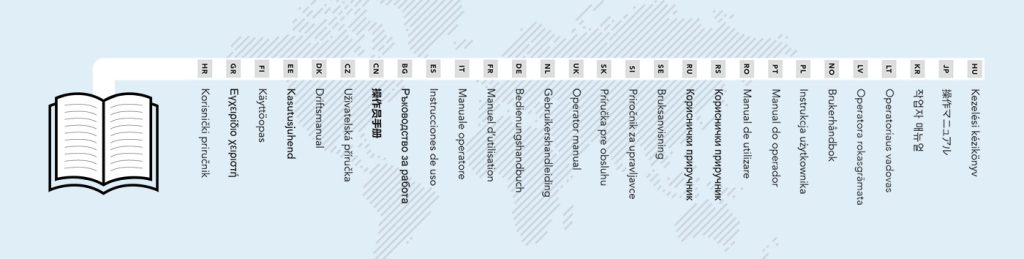
Many European directives require technical documentation to be available in one or more official languages of the country where the product is placed on the market.
For example:- Under the Machinery Directive, technical documentation must be provided in the official EU language or languages required by the Member State where the machine is sold or put into service.
- Under the Low Voltage Directive, products must be accompanied by instructions and safety information in a language that consumers and end users can easily understand, as determined by the Member State concerned.
An overview of all recognised countries and their official languages can be found here. - Improved user experience
Documentation in the user’s native language is easier to read and apply. Users experience less frustration and make fewer mistakes. This increases customer satisfaction and strengthens your professional image.
STE and Translation
If technical documentation is written in Simplified Technical English (STE), the need for translation may sometimes be reduced. This may apply when the target audience is technically skilled and has a strong command of English, or the documentation is intended for internal use within an international organisation.
However, legal obligations or user expectations may still require translation. Always verify the applicable requirements before deciding not to translate.
A careful assessment of legal, technical and user-related factors ensures that your documentation remains compliant, clear and effective.
The Difference Between Translation and Localisation
Translating a document involves more than converting text from one language into another. In many cases, the content must also be adapted to meet local laws, standards and user expectations.
For example, a Dutch NEN standard may need to be replaced by a German DIN standard. Units of measurement often require adjustment as well. Europe uses litres (L), while the United States uses gallons (gal). The same applies to length (centimetres versus inches) and temperature (Celsius versus Fahrenheit).
Correctly converting these elements prevents misunderstandings and ensures that the documentation remains clear and usable for the target audience.
In some cases, illustrations must also be adapted. For instance, images may need to reflect the difference between European and American plugs or connectors.
These adaptations go beyond translation alone. This process is known as localisation.
Selecting Translators
Technical translation is essential for the correct and safe use of a product. For this reason, you should always work with specialised translators who have knowledge of the relevant field.
Technical translators must use correct terminology and work accurately and consistently. Poorly translated instructions or specifications can lead to misunderstandings, unsafe situations or legal risks. Selecting the right translator is therefore crucial.
Quality Assurance
You naturally want your technical translation to meet high standards. One way to safeguard quality is to work with a translation agency that is ISO 17100 certified. This international standard sets clear requirements for translation services.
An ISO 17100-certified agency ensures that:
- Translators have recognised qualifications and relevant experience
- Each translation is reviewed by an independent second linguist
- Structured quality management processes are in place
- Confidential information is handled securely
This approach increases reliability and consistency.
Translation Costs
Professional translation involves costs. To manage these costs effectively, it is useful to understand which factors influence the final price.
Key factors include:
- The use of translation memories
- The use of machine translation with post-editing
- The quality and consistency of the source text
Translation Memory
A translation memory is a database that stores previously translated segments. When identical or similar text appears again, the system recognises it.
A segment may be a 100% match or a partial match. Reusing these matches reduces translation time and therefore lowers costs. Translation memories are especially effective for technical documentation with recurring content.
Machine Translation and Post-Editing
Another option is machine translation followed by professional post-editing. A translation engine, such as DeepL, MateCat or Google Translate, produces a first draft. This draft is based on algorithms and large language databases.
However, machines do not always interpret context, terminology or nuance correctly. A professional translator therefore reviews and corrects the text.
The result is a high-quality translation at a competitive cost. The effectiveness of this approach depends on the subject matter and the quality of the source text.
By using translation memories, terminology lists and structured workflows, you can control costs while maintaining quality.
Manualise Provides the Technical Translation of Your Documentation
Are you exporting your product and need the accompanying technical documentation translated? Or does your documentation require technical translation for another reason? Manualise manages the complete technical translation process for you.
Translation Partners
We collaborate with an extensive network of reliable translation partners. Based on your requirements for quality, budget and delivery time, we select one or more suitable technical translators. The final decision always remains yours.
Do you already work with a preferred translation partner? We are happy to integrate them into our process.
After translation, we take care of layout and formatting. You receive documentation that is fully prepared and ready for publication.
With a structured translation process, you ensure clarity, compliance and usability in every market where you operate.